 Austria to Alex Newsletter .jpeg
Our work
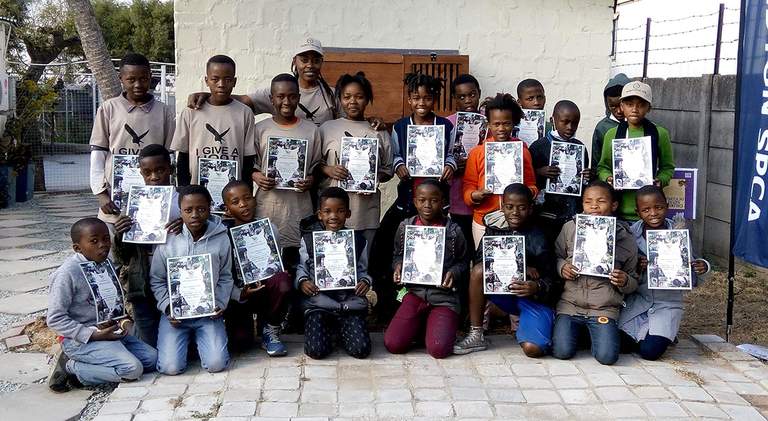
The first part is the educational aspect and the second part is the owl release programme. Education is an important pillar of the project. Our teams go out to participating schools to give presentations on owls and their role in an ecosystem. These presentations are also used to address any remnant myths believed by the people in the townships. School children sign up and receive permission from their parents to be involved with the project. The release program takes place over a three-week period. For the first 20 days, the juvenile Barn Owls (Tyto alba) or the Spotted Eagle Owls (Bubo africanus) are placed in an owl release box where they will be fed daily by the school children. After the 20 days, the owls are released onto the school premises. The science behind this is that the owls will remain around the school, where they will hunt for rodents and as adults, use the owl box as breeding site. The school is an ideal place for them as it is quite at night. For the week after the owls have been released, the school children will continue to place food for the juvenile owls to support feed and continue to play the surrogate parent role. All the owls that are released through the project are owls we receive through rehabilitation centres and SPCA branches across Gauteng.
Austria to Alex Newsletter .jpeg
 Austria Masks Facebook .jpeg
 Austria Children dissecting owl pellets .png
 Austria.png
 Alex to Austria Newsletter .jpeg
 9.png
9.png
 9.png
9.png
 8.png
8.png
 8.png
8.png
 8.png
8.png
 8.png
8.png
 8.png
8.png
 8.png
8.png
 7.png
7.png
 7.png
7.png
 7.png
7.png
 7.png
7.png
 7.png
7.png
 7.png
7.png
 7.png
7.png